
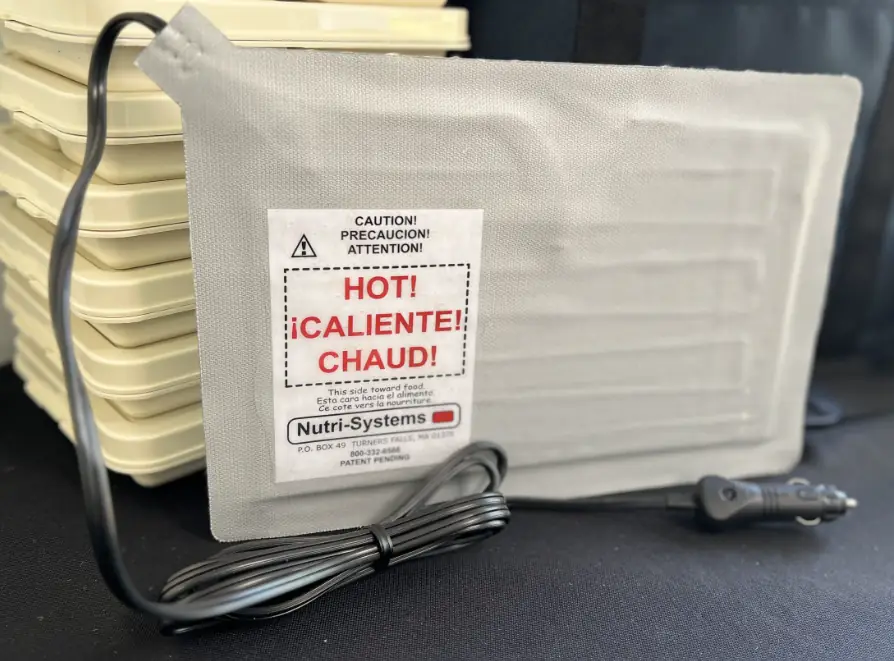
Already have non-electric thermal bags? You don’t have to replace them to keep meals hot on longer routes. Add a heat source instead. Meals on Wheels programs use two: our patented Electric Bag Heater, which plugs into the vehicle, and RouteHeat™ heat units, which need no outlet at all. Here’s how to choose.
In this guide 5 sections
Quick answer
- Drivers use their own or program vehicles with a 12V outlet: Electric Bag Heater. It adds heat for as long as it’s plugged in.
- Walking routes, no outlet, or volunteers who change often: RouteHeat heat units. Heat them in boiling water and stand one in the bag.
- Below freezing: use plug-in heat. RouteHeat units last about three hours in the 30s and 40s, less in harder cold.
Side by side
| Electric Bag Heater | RouteHeat™ Heat Unit | |
|---|---|---|
| Power | Vehicle 12V outlet (3 amp), 7 ft cord | None on the route; heat in boiling water 15 to 18 minutes |
| How long it heats | As long as it’s plugged in | 140°F to 160°F for 3 to 4 hours |
| Warm-up | Heats up in minutes | Ready once fully liquid inside |
| Size | Flat 8-1/2″ x 13″ panel | 6″ x 6-3/4″ x 1″, under a pound |
| Fits | All our thermal bags and many others, even Igloo or Coleman carriers | Our meal transporters and any thermal bag |
| Price | $175 | $22 each, or $475 for a case of 24 |
| Made in | USA | USA |
Electric Bag Heater: plug-in heat for any bag
The Electric Bag Heater stands upright in the bag and warms the air around the meals, adding heat back every time the bag is opened at a stop. Its thermostat holds a 180°F surface temperature. Running two bags off one outlet? Add our DC Car Outlet Doubler.
It costs less than half the price of a new electric bag (a Large electric thermal bag is $425), so it’s the lowest-cost way to turn the bags you already own into heated bags.
RouteHeat™: reusable heat with no outlet
Each RouteHeat unit is filled with a material that stores heat as it melts and gives it back as it hardens, so it holds a steady 140°F to 160°F instead of starting too hot and fading fast. It won’t go above 160°F, which protects the food’s texture and taste, and it’s safer for volunteer hands than a 350°F heat stone.
To use: heat it standing upright in boiling water for 15 to 18 minutes until fully liquid, lift it out with non-metal tongs, dry it, and stand it upright beside the meals. Reuse it day after day.
New to RouteHeat? Request a free sample; you pay only shipping.
Tips for either one
- Start with meals well above 140°F when they leave the kitchen.
- Stand the heat source upright next to the meals, not under them.
- Keep bags zipped and open them only long enough to take out one meal.
- In blue non-electric bags, keep the insulated pad in for extra heat retention.
Not sure which fits your routes? Compare all the options in Heat Stones vs. Heat Units vs. Electric Bags, or call 1-800-332-6566 and talk to Greg.
Products in this guide
Most popular with Meals on Wheels programs
- Thermal bags: electric and non-electric, hand-sewn in the USA since 1977
- REusable meal trays: about 4¢ a meal vs. 29¢ to 56¢ for disposables (free samples)
- Electric Bag Heater: patented heater that makes any thermal bag electric
- RouteHeat™ heat units: reusable, 140°F to 160°F for 3 to 4 hours, no outlet needed