
Cold weather is the hardest time of year to keep home-delivered meals hot. A cold vehicle pulls heat out of a bag faster, and every open door at a stop lets more heat escape. Here’s how to adjust your routes and equipment for winter.
In this guide 6 sections
Know how long your heat source lasts in the cold
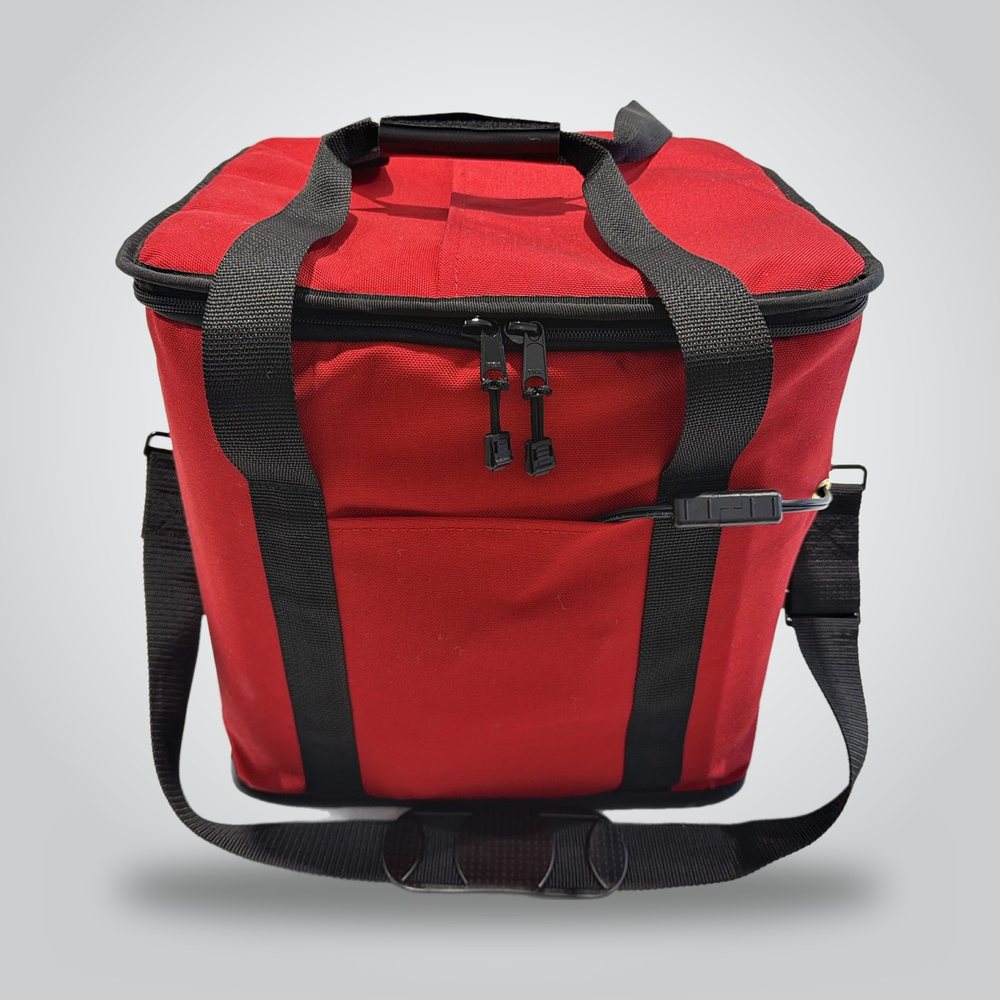
- Electric thermal bags keep adding heat for as long as they’re plugged in, so they’re the most reliable choice in freezing weather.
- Electric Bag Heaters turn a non-electric bag into a heated one and also run for as long as they’re plugged in.
- RouteHeat™ heat units hold heat for up to four hours in mild weather. In the 30s and 40s, plan on about three hours. Below freezing, we recommend plug-in heat instead.
- Plain insulated bags with no heat source are only suitable for very short routes in winter.
Before the route
- Keep bags indoors overnight. A bag stored in a freezing vehicle starts the day cold.
- Plug electric bags in about 30 minutes before loading so they’re at full temperature.
- Warm up the vehicle before loading if you can.
- Start hot. Meals should leave the kitchen well above your holding temperature.
- Load last, leave right away. Pack hot meals at the end and don’t let loaded bags sit.
On the route
- Keep bags zipped and open them only long enough to take out one meal.
- Split large routes between two bags, so one stays closed while the other is in use.
- In blue non-electric bags, keep the insulated pad in for extra heat retention.
- Recheck that electric bag plugs are pushed all the way in. Cold, stiff cords can work loose.
- Check a test meal at the last stop now and then to make sure meals are arriving hot.
Cold items in winter
Keep cold items in their own bag. In freezing weather, items like milk and fruit can freeze in an unheated vehicle, so keep them in an insulated bag rather than loose in the car.
Plan for storms
- Have a plan for weather days, such as delivering shelf-stable emergency meals ahead of a storm.
- Keep spare cords and a spare bag in case equipment fails on a cold morning.
- Remind volunteers about icy steps and walkways.
Need more heat on your routes?
Read How to Keep Meals Hot on Long Routes and Safe Temperatures for Home-Delivered Meals, try the free Route Planner with your coldest-day temperature, or call 1-800-332-6566.
Products in this guide
Most popular with Meals on Wheels programs
- Thermal bags: electric and non-electric, hand-sewn in the USA since 1977
- REusable meal trays: about 4¢ a meal vs. 29¢ to 56¢ for disposables (free samples)
- Electric Bag Heater: patented heater that makes any thermal bag electric
- RouteHeat™ heat units: reusable, 140°F to 160°F for 3 to 4 hours, no outlet needed