
Home-delivered meals spend time in a vehicle before they reach the client. Keeping them out of the temperature “danger zone” during that time is one of the most important food safety jobs a program has. Here are the numbers and the habits that keep meals safe.
In this guide 7 sections
The basic rule: hot above 135°F, cold below 41°F
The FDA Food Code, which most state and local health codes are based on, requires hot food to be held at 135°F or above and cold food at 41°F or below. Between those two numbers is the danger zone, where bacteria grow fastest.
Your state may be stricter. Many state units on aging and nutrition programs set their own home-delivered meal standards, and some require hot meals to be held at 140°F or higher. Check your state’s nutrition program standards and your local health department, and follow whichever rule is stricter.
Where meals lose heat on a route
- Packing time: meals cool while bags are loaded. Pack quickly and close bags right away.
- Every stop: each time a bag is opened, heat escapes. The more stops, the bigger the loss.
- Cold weather: a cold vehicle pulls heat out of a bag faster.
- Long routes: the last meal is the hardest to keep hot.
How to keep hot meals hot
- Start hot. Meals should leave the kitchen well above your holding temperature.
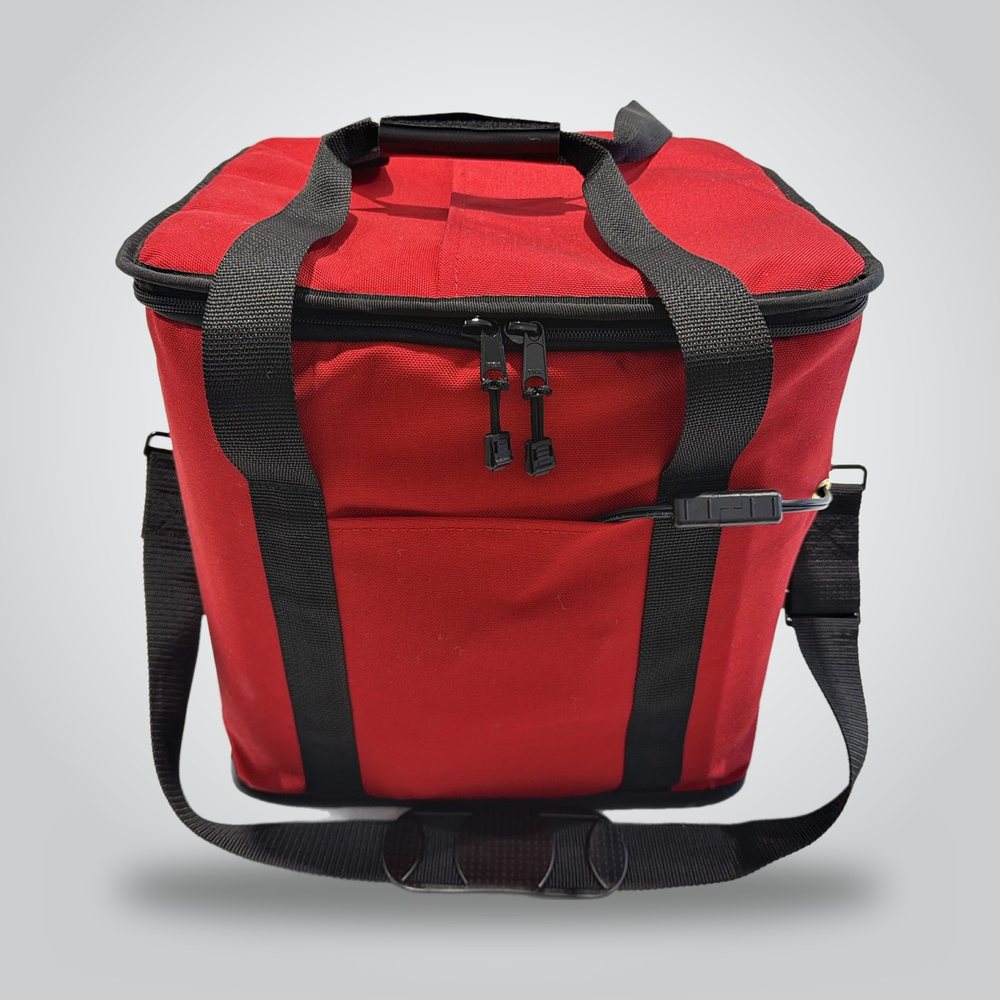
- Use a heat source on any route longer than about 30 minutes: electric thermal bags, an Electric Bag Heater or RouteHeat™ heat units.
- Plug electric bags in about 30 minutes before loading so they’re at full temperature.
- Split big routes between two bags, so one stays closed while the other is in use.
- Keep bags zipped between stops.
How to keep cold items cold
- Pack cold items (milk, salads, fruit, sandwiches) in a separate bag from hot meals.
- Pre-chill cold items to 41°F or below before they go in the bag.
- Use ice packs in the cold bag on long or warm-weather routes.
Checking temperatures
Many programs are required to check and record meal temperatures. A simple routine:
- Take the temperature of a sample meal with a clean, calibrated probe thermometer when bags are packed.
- On a regular schedule, have a driver check a test meal at the last stop of the route, the hardest point to stay hot.
- Write down the date, route, time and temperature.
- If the last-stop reading is too low, change the setup: add a heat source, shorten or split the route, or start hotter.
Use our free printable meal temperature log to record each check.
Probe the food itself. A bag’s air temperature or a heater setting doesn’t tell you the temperature of the meal.
Need help with a route that runs cold?
Read How to Keep Meals Hot on Long Routes, try our free Route Planner, or call 1-800-332-6566.
Sources
- FDA Food Code, section 3-501.16 (hot and cold holding)
- Your state unit on aging’s home-delivered nutrition standards and your local health department
Products in this guide
Most popular with Meals on Wheels programs
- Thermal bags: electric and non-electric, hand-sewn in the USA since 1977
- REusable meal trays: about 4¢ a meal vs. 29¢ to 56¢ for disposables (free samples)
- Electric Bag Heater: patented heater that makes any thermal bag electric
- RouteHeat™ heat units: reusable, 140°F to 160°F for 3 to 4 hours, no outlet needed